How often should the garden be maintained?
Work out how often your Sydney garden needs maintenance based on growth, lawn size, hedges, planting and how tidy you want it kept.
In this guide
Contents
Key takeaways
- The right interval depends on growth, use and how tidy you want the garden kept.
- Lawns usually set the pace; hedges, beds and weeds can often wait longer.
- The quickest way to settle it is to have someone look at the garden.
There is no single ideal maintenance schedule for every garden. The right frequency depends on how quickly the property grows, how formal you want it to look, and whether the garden is already in good condition.
It depends on the property, not the postcode
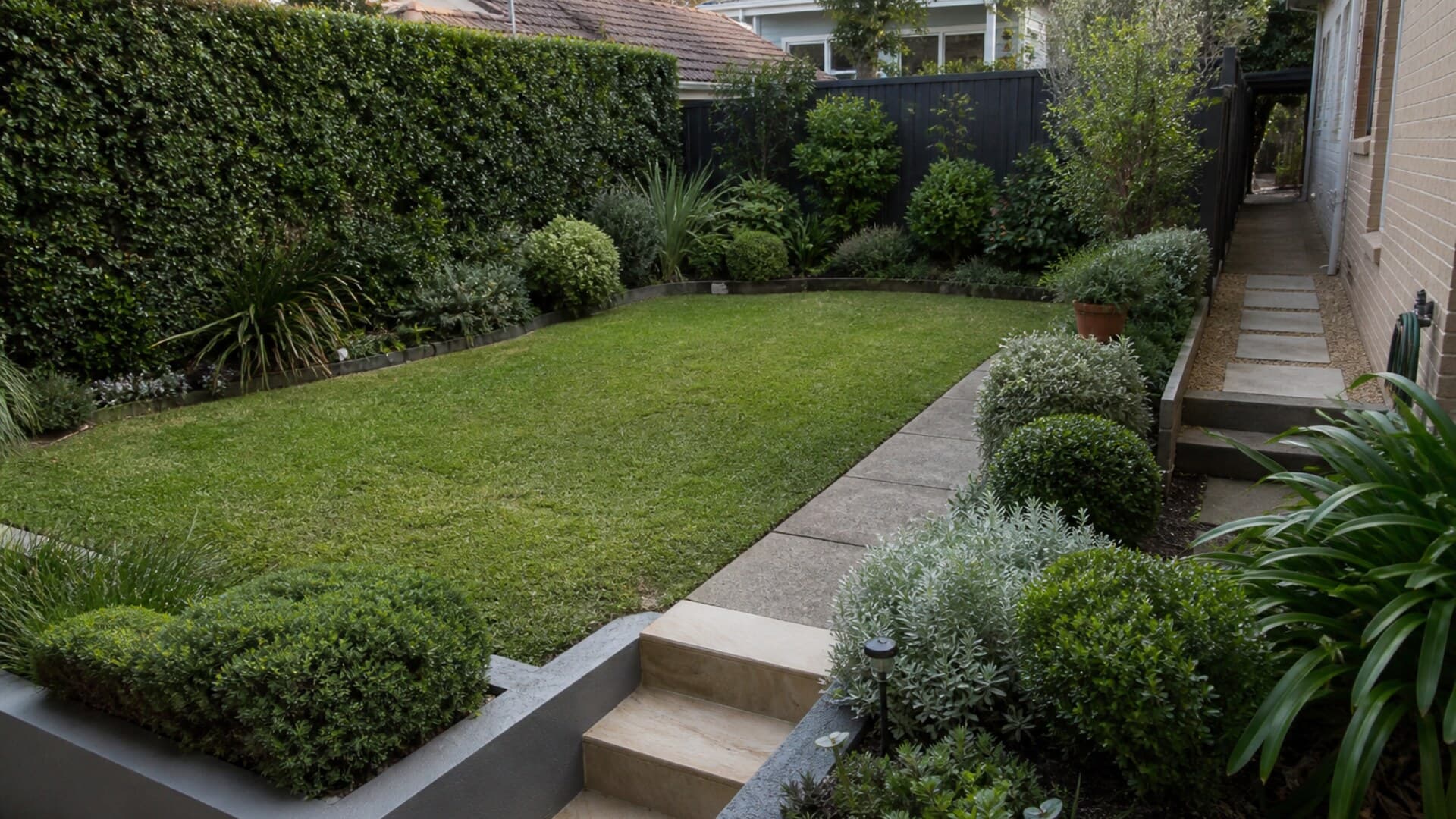
A small courtyard with hardy planting might only need occasional attention, while a family garden with lawn, hedges, screening plants, and active beds can look untidy very quickly if maintenance slips. The more formal the garden and the faster it grows, the more often it usually needs a visit.
Usage matters as well. If the front garden drives street presentation or the backyard is used every weekend, most homeowners prefer a schedule that keeps things consistently neat rather than allowing the property to swing between tidy and overgrown.
A sensible starting point
Start with the condition of the garden and the finish you want between visits. A lawn, formal hedges and a front garden that needs to stay sharp will usually need a shorter gap than a hardy courtyard where the aim is simply to keep things under control.
Seasonal adjustments are normal. Spring and early summer often need more attention because growth speeds up, while winter visits may focus more on pruning, cleanup, mulching, and planning rather than mowing frequency alone.
What each visit pattern suits
| Visit pattern | Best suited to | Watch out for |
|---|---|---|
| High-presentation schedule | Strata entries, business frontage or gardens that need to stay sharp | Can be more attention than a normal home needs |
| Regular household schedule | Family gardens with lawn, hedges and active beds | May need adjusting when growth speeds up or slows down |
| Owner-assisted schedule | Hardy courtyards and simpler gardens where the owner handles small jobs | The gap can be too long if hedges or weeds move quickly |
| Seasonal support | Clean-ups, pruning windows or properties mostly maintained by the owner | Not enough for a garden that is already overgrown |
Get it under control first
If the garden is already out of control, it is usually better to book a clean-up before deciding how often to have it maintained. Once the overgrowth is gone, we can see the lawn, beds, hedges and access ways properly and base future visits on how quickly everything grows.
This is the same logic behind Abloom's maintenance quoting. A property with a Lane Cove-style lawn and garden edging job may need a different rhythm to a Forestville garden bed and turf refresh. The condition of the work area matters as much as the suburb.
How to choose the gap
Choose a shorter gap if the lawn grows quickly, hedges lose shape between visits, weeds are visible before the next appointment or the front garden needs to look ready for visitors all the time. Strata, rentals and properties with formal edges or screening may also need closer attention.
Choose a longer gap if the garden is already simple, growth is moderate and you are happy to handle minor jobs between visits. That can work well for lower-maintenance beds, courtyards and properties where the goal is control rather than a polished finish.
Review it after the first season
The first schedule is an informed starting point, not a permanent rule. After one spring or summer cycle, it is easier to see whether the visits are too close, too far apart, or right for the property. A good provider should be willing to adjust the plan rather than leave the garden slipping between visits.
The commercial page for garden maintenance is the best next step when you are ready to set a frequency around the property rather than a broad rule of thumb.
Signs the gap is too long
If edging disappears, weeds are seeding before each visit, hedges lose shape or every appointment turns into a catch-up job, the gap between visits is probably too long.
On the other hand, some gardens are being serviced more often than necessary. If each visit is very light and the property stays tidy with minimal growth, you may be able to move to a longer interval without losing control.
Start with how you want it kept
The best maintenance schedule starts with the level of finish you want and the amount of gardening you are willing to handle yourself between visits. Some clients want a consistently polished front and backyard, while others only want the heavy lifting taken care of so the garden stays manageable.
Abloom Landscaping & Gardening has been helping homeowners since 1995 set a garden maintenance frequency around the real condition of the garden, not a generic package. A quote visit is often the fastest way to work out whether the garden needs a one-off tidy-up, close attention or a lighter ongoing schedule.
Two things to work out before you call
First, how tidy the garden has to look between visits. Keeping a garden under control and keeping a garden looking sharp from the street are two different jobs, and they run on different intervals.
Second, how much you want to do yourself. If you are happy to pull a few weeds between visits, we can plan around that. If you would rather we handled the lot, including edges and green waste, say so and we will price it that way.