Lawn care that actually keeps the grass healthy
Lawn care tips to improve turf health, avoid common mowing mistakes and keep Sydney lawns greener through the seasons.
In this guide
Contents
Key takeaways
- Mowing height is one of the biggest factors in lawn health.
- Deep watering and sensible feeding usually outperform frequent light care.
- Aeration and soil improvement matter when lawns feel compacted or patchy.
Healthy lawns come from a few basics done well: mowing at the right height, watering properly, feeding when needed, and correcting compaction before the turf thins out.
Mowing height matters more than people expect
Regular mowing keeps a lawn tidy, but cutting too low is one of the fastest ways to weaken it. Short-cut turf dries out faster, struggles in heat, and gives weeds more room to move in because the grass loses density and shade at soil level.
A better approach is to keep mowing consistent and avoid removing too much of the blade at once. That usually produces a fuller lawn, a more even colour, and a surface that stands up better to everyday family use.
Match the care to the lawn and the site
The right lawn care depends on the grass, the shade, soil, slope, drainage and how much the lawn gets used. Buffalo lawns such as Sir Walter are a common choice for Sydney homes with mixed sun and shade, but they still need sensible mowing, watering and feeding. A lawn in full sun with kids and a dog on it will not behave like a shaded side lawn that stays damp after rain.
| Lawn problem | Likely cause to check | Next step |
|---|---|---|
| Thin patches | Shade, compaction, poor soil, or low mowing | Adjust mowing height and improve soil before patching |
| Water pooling | Poor falls, compacted base, or blocked drainage | Check levels before adding more turf |
| Weeds spreading | Thin grass, bare soil, or delayed mowing | Improve turf density and remove weeds before they seed |
| Dry edges | Heat, poor soil, or uneven watering | Adjust watering and review soil condition |
| Uneven mowing | Lumpy levels or soft ground | Consider levelling before replacing turf |
When the lawn needs replacing rather than reviving
Some lawns cannot be fixed by mowing and feeding alone. If the base is uneven, water sits in the wrong place, synthetic turf has failed, or the soil is too compacted for roots to establish, the lawn needs stripping and relaying rather than nursing along. That is turf laying work, and it starts with the ground rather than the grass.
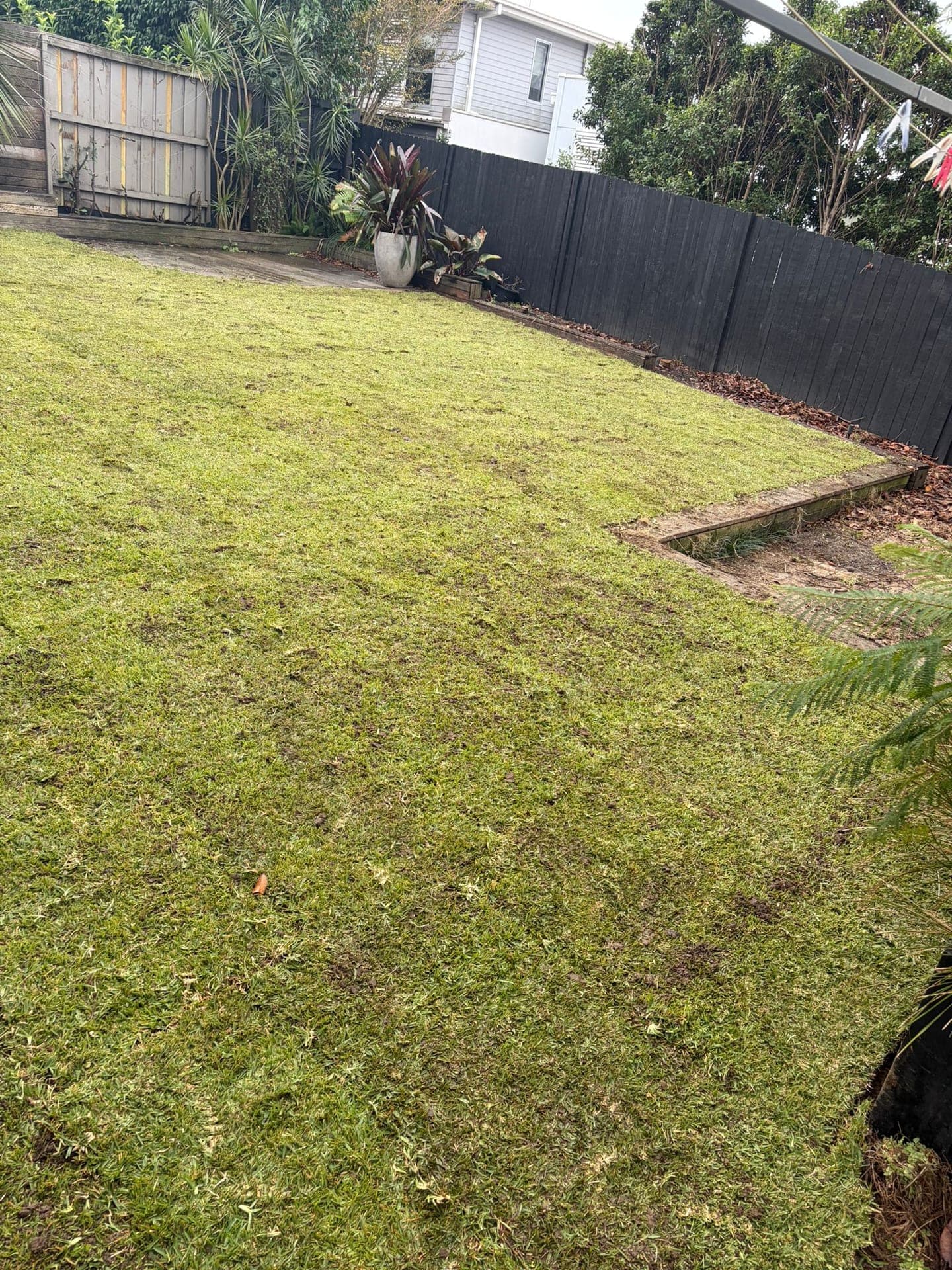
The Willoughby Sir Walter lawn replacement is a clear example. The successful finish depended on removing the failed synthetic grass, replacing the underlay, correcting falls, levelling the area, and then installing the turf. The finished lawn depended on the groundwork beneath it.
A simple rhythm beats a clever product
Most lawns respond best to a simple rhythm: mow at a sensible height, water deeply when conditions require it, feed at the right times, remove weeds early, and fix compaction before bare patches spread. The rhythm matters more than any single product.
If the lawn is part of a regular garden service, ask what is checked each visit. Mowing without edge control, weed control or attention to the soil can keep the lawn short while the underlying condition still gets worse.
Look after new turf differently
New turf needs careful early watering, delayed heavy use, and a first cut at the right time. Once established, it should move into normal garden maintenance rather than staying on the same high-water establishment routine. Overwatering established turf can be just as unhelpful as neglect.
Water deeply rather than constantly
Frequent light watering often encourages shallow roots, which makes lawns more dependent on regular moisture and more vulnerable during hot weather. Deeper, less frequent watering is usually the stronger long-term strategy because it pushes the root system further down.
Early morning is generally the best watering window. It reduces evaporation compared with the middle of the day and lowers the chance of prolonged overnight moisture sitting on the lawn.
Feeding, aeration and weed control work together
A lawn cannot stay healthy on mowing alone. Feeding gives the turf the nutrients it needs, aeration relieves compaction in busy areas, and weed control prevents thin sections from being taken over. When one of those pieces is missing, the lawn usually starts to decline gradually rather than all at once.
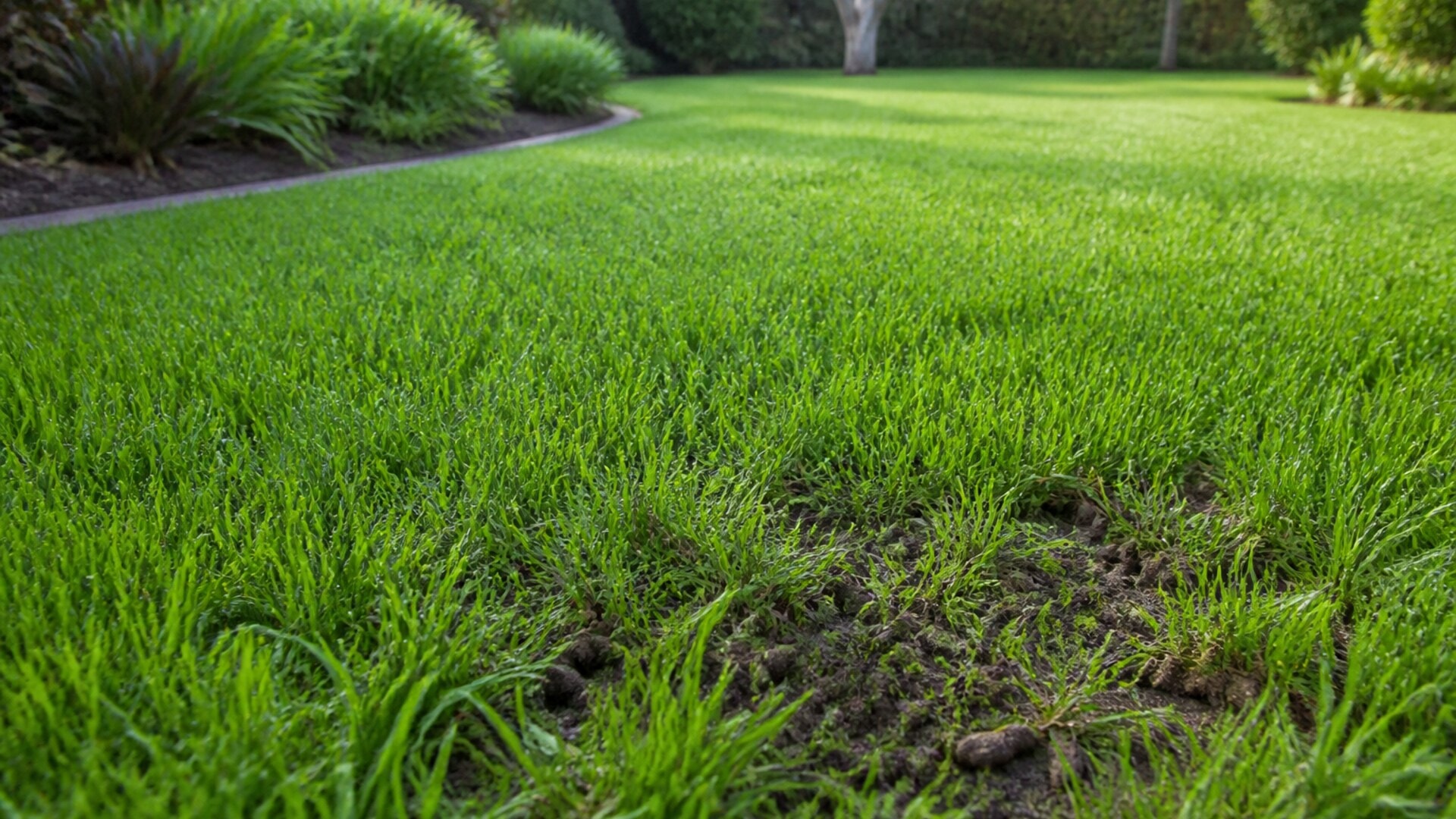
If growth is patchy, water is pooling, or the lawn feels hard underfoot, aeration and soil improvement may be more important than another pass with the mower. Good lawn care is often about correcting the cause, not just tidying the symptoms.
When it is worth getting someone in
Some lawns only need a better routine. Others need a proper recovery plan because they are compacted, nutrient-poor, weed heavy, or affected by shade and drainage. The longer those issues are left, the more time and money it can take to get the lawn back into shape.
Abloom Landscaping & Gardening has been helping Sydney homeowners since 1995 with lawn maintenance and gardening aimed at a healthier, easier-to-manage result, not just a quick tidy-up. If your lawn is stuck in a cycle of mowing without real improvement, that is usually the time to get advice.
What to tell us about the lawn
Photograph the thin patches, the shaded parts, the tracks where everyone walks, any soft ground, and anywhere water sits after rain. Tell us the turf type if you know it, and mention pets, kids, watering restrictions and how often it is being mown now.
If the lawn went in recently, the install date, when it had its first cut, how it has been watered and any fertiliser used this season all change what we would suggest.