What changes the price of tree lopping in Sydney?
What affects tree lopping costs in Sydney in 2026, what a proper quote should cover and which site conditions can push the price higher.
In this guide
Contents
Key takeaways
- A good tree lopping quote should spell out the work, clean-up and green waste removal.
- Cost rises with tree size, branch volume, access difficulty, and nearby structures.
- Early pruning and reduction work is usually cheaper than a large catch-up job after long neglect.
Tree lopping and pruning costs in Sydney can vary depending on tree size, branch volume, access, waste removal, and how close the work is to roofs, fences, driveways, and neighbouring structures.
What a tree lopping quote should spell out
A proper tree lopping quote should explain exactly what is being reduced, lifted, thinned or removed. It should also cover access, clean-up, green waste removal and whether the price is only for the main branch work or includes pruning to reshape the tree afterwards.
The detail matters because tree work is rarely just about the cuts themselves. Safe access, protection of nearby garden areas and a clear clean-up plan are what separate a firm quote from one that grows once the crew is on site.
Cost factors worth confirming
| Factor | Why it matters |
|---|---|
| Tree size and spread | Larger branches take longer to cut, lower, and remove |
| Proximity to structures | Roofs, fences, sheds, pools, and driveways need more careful handling |
| Access | Steep ground, tight side paths, and poor parking add labour |
| Waste volume | Branches, leaf material, and logs need loading and disposal |
| Finish level | A rough reduction is different to pruning, shaping, and full site cleanup |
| Council or safety constraints | Some trees need approval before anything is cut |
Get the whole tree assessed first
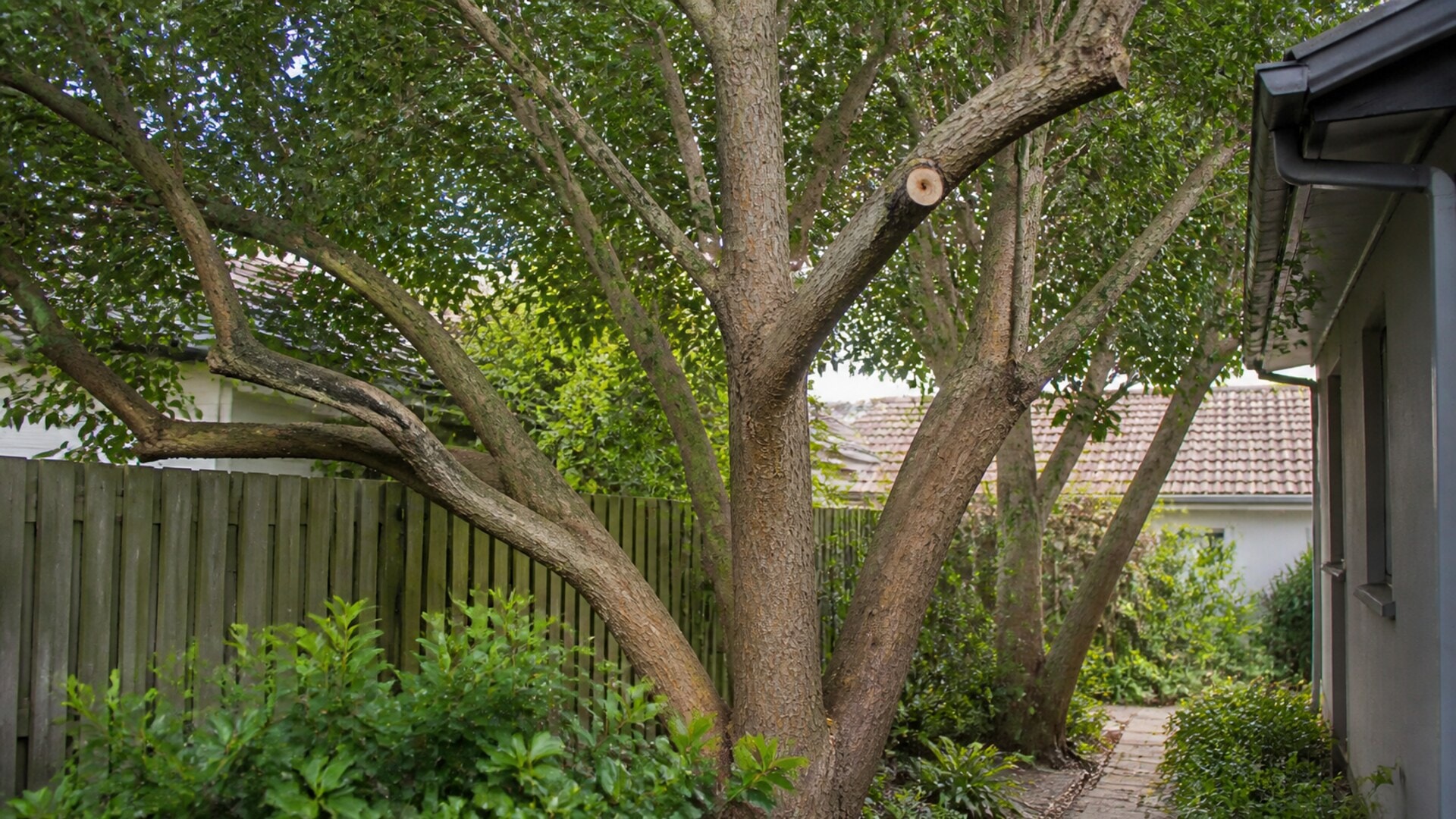
Photos are useful, but they flatten a tree. They rarely show the lean, the weight sitting over a roof, what the branches are resting on or how a crew would get equipment in. That is why the price only firms up once someone has stood under it.
Council rules also matter. Some trees are protected and some work needs approval before it starts, which is worth sorting out early rather than on the day.
Tree work usually creates a garden follow-up
After branch reduction, the garden below often changes. More light may reach beds that were shaded, leaf litter may be removed, and previously blocked access may open up. That can create the right moment for pruning, planting, mulching, lawn repair, or a broader gardening tidy-up.
Ask whether the quote includes only the branch work or also the garden recovery afterwards. A neat canopy with debris left through the beds is not a finished result for most homeowners.
When the cheapest quote is not the best one
Tree work near roofs, fences, paths, and neighbouring property needs care. A quote that is cheaper because it skips protection, cleanup, or proper reduction may create more risk than it saves. The better quote should explain how branches will be handled, where waste will go, and what the property will look like when the crew leaves.
What usually pushes the price up
The main price drivers are tree height, branch thickness, access difficulty, and how much material needs to come out. A modest pruning job on an accessible ornamental tree is very different from reducing a large canopy over a driveway, fence line, or neighbouring structure.
Site conditions can add time quickly. Steep ground, tight side access, overhead obstacles or the need to protect paving and established planting all affect labour. If the work also includes shaping surrounding shrubs, removing deadwood or carting away a large volume of green waste as part of broader gardening work, that should be allowed for in the quote.
How to keep the cost down
The easiest way to control cost is to avoid leaving the tree untouched until the work becomes major corrective pruning. Smaller reductions and regular pruning are usually cheaper than a large catch-up visit once branches are crowding roofs, blocking light or getting too close to structures.
It also helps to send clear photos before quoting, confirm access conditions, and mention whether you want only the main reduction done or a cleaner follow-up prune as well. If other outdoor work is already planned, bundling sensible garden cleanup or planting adjustments can sometimes reduce repeat call-out time.
When it is time to get someone out
If branches are blocking light, overhanging roofs, pushing into access ways, or creating an awkward shape around the property, it is usually time to get a professional assessment. Acting earlier keeps more options open for a controlled reduction and usually costs less than waiting until the work becomes urgent.
Abloom Landscaping & Gardening has been helping Sydney property owners since 1995 with tree lopping and pruning that improves safety, shape and access. If you are unsure whether the tree needs a light prune or a more substantial reduction, we can come out and have a look.
What to send us
Photograph the whole tree, not just the branch bothering you, and take a couple of shots of what sits around it: the roof, fences, driveway, pool, garden beds and anything on the neighbour's side. If you know the tree is protected or there is a power line nearby, say so up front.
Then tell us whether you only want the branches reduced, or whether you want the garden underneath tidied up afterwards as well. That second part is usually what separates two quotes that look similar on paper.